CELL CULTURE
In addition to supporting research projects, we offer hands-on training to graduate students and interns.
Laboratuvar Cihazlarımız
- Biorad TC20 Cell Counter — Cell counting and analysis
- ThermoFisher Evos XL Core Microscope — Cell observation and imaging
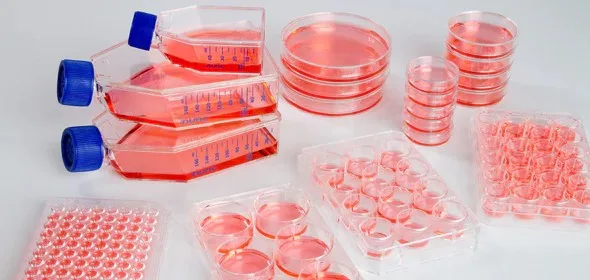
With this infrastructure, our laboratory performs in vitro cultures of various cell types, enabling researchers to examine intracellular and intercellular biochemical processes at the molecular level in fields such as cancer, stem cells, and cell mechanics. All our work is focused on research and R&D projects; it is not intended for diagnostic or clinical treatment purposes.
Mammalian Cell Culture
Cell culture is the process of growing and multiplying cells under controlled laboratory conditions. This method enables experiments that cannot be performed in vivo to be carried out in vitro.
Studies conducted at HelixLab Cell Culture Laboratory include:
- In vitro production of mammalian cells
- Investigation of cytotoxic and apoptotic effects
- Cell manipulation and protein analyses
- In vitro experiments and differentiation of stem cells
Tissue Culture
Tissue culture is the process of growing tissues and cells outside the living organism (ex vivo) in liquid, semi-solid, or solid culture media.
- Cells and tissues are maintained under predetermined controlled conditions
- Desired experimental applications are performed
- Results can be monitored in a more objective and reproducible manner
Cell Proliferation, Cryopreservation, Passaging
- Passaging: When cells in the primary culture vessel grow and fill the available space, passaging is performed to maintain continuous cell growth and experiment continuity.
- Use of Frozen Cells: Previously frozen cells are thawed to create new cultures for research or production projects.
- Thawing Process: Thawing frozen cells requires as much care as freezing; this process is critical for maintaining cell health and experiment reliability.
Cell Viability Analyses
Staining techniques are applied for cell morphology and viability analyses at HelixLab. These methods are used for observation and characterization of cells under a microscope.
- Live/Dead Cell Discrimination: Cells with intact membranes do not take up dye, while dead cells with damaged membranes are stained.
- Dyes Used: Erythrosin-B, trypan blue and similar dyes are used to distinguish dead cells through cytoplasmic staining, while live cells appear bright.
Cytotoxicity Analyses
Cytotoxicity tests are applied for purposes including biocompatibility, implants, cosmetic products, pharmacology, and drug development projects, as well as investigating the effects of toxic agents and examining the effects of anticancer drugs at the cellular level.
- Colorimetric Methods
- Fluorometric Methods
- Luminometric Methods
- Apoptosis Analyses
- Autophagy Analyses
Determination of Anticancer Activity at the Cellular Level
At HelixLab, synthesis and investigation of new anticancer molecules are conducted within the scope of modern biotechnology and drug development projects.
Wound Healing Assay
HelixLab Cell and Tissue Laboratory investigates wound healing processes using techniques that examine cell migration and cell-cell interactions, and conducts R&D studies on products developed to accelerate wound healing.
Transfection
Transfection is the process of transferring foreign nucleic acids into eukaryotic cells, thereby creating genetically modified cells. At HelixLab, transfection techniques serve as a powerful analytical tool in studies on gene function, regulation, and protein functions.
Genotoxicity and Methylation Studies
Genotoxicity tests are used to investigate the genotoxic potential of chemical and physical agents. Through these tests:
- Genotoxic and potentially carcinogenic effects of substances encountered in daily life
- Biological reliability and toxicity profiles of these substances
- Biological monitoring studies to predict cancer risk
LEGAL DISCLAIMER
HELIXLAB is not a medical laboratory operating under the Medical Laboratories Regulation. Our activities are limited to R&D, biotechnology projects, product quality control, diagnostic kit development, and clinical research support studies.
The content on our website is for informational purposes only and does not in any way imply that diagnostic or treatment services are provided.